


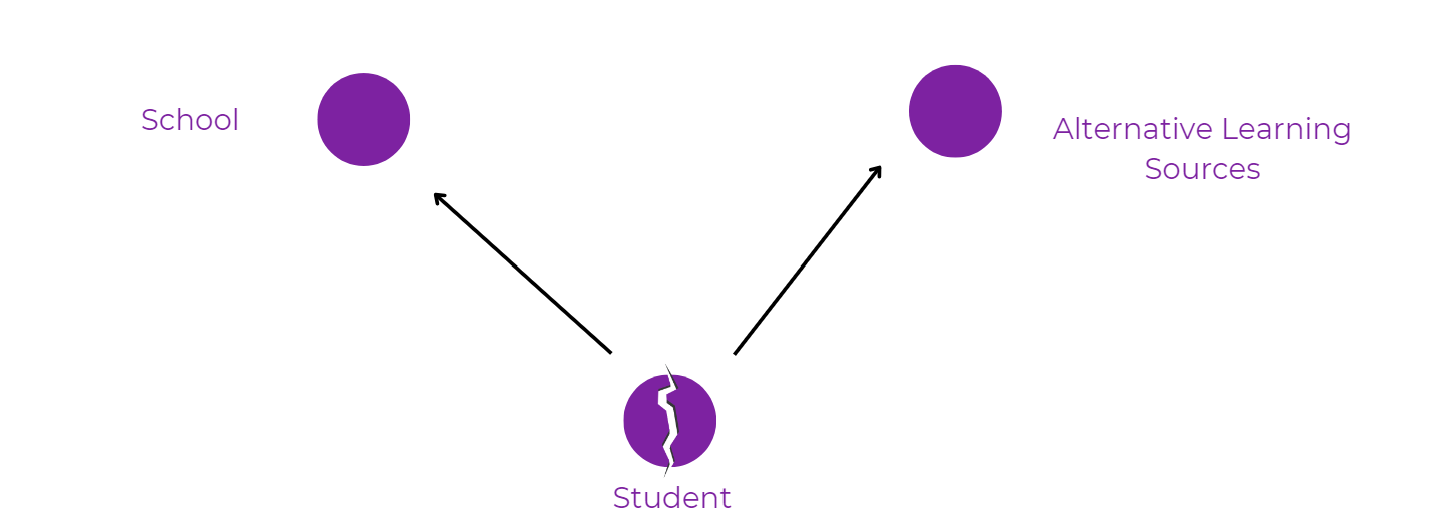
Did you know that over 51% of school-aged children in India are affected by mental health issues like anxiety and social withdrawal? As digital resources proliferate, students are increasingly pulled in different directions, complicating the educational landscape— we call this phenomenon the “three-body problem.” Three bodies are students, schools, and a plethora of alternative learning sources. This makes personalized learning not just beneficial but essential.
The Pressing Need for Personalized Learning
The diversity in students’ learning paths has significantly expanded, highlighting the urgent need for formative activities tailored to individual academic goals and learning styles.
AI as a Strategic Educational Solution
Artificial Intelligence (AI) offers a robust solution to streamline the complex dynamics between students, schools, and alternative learning resources. AI enhances educational outcomes by enabling:
Efficient Data Analysis:
AI systems offer real-time, personalized feedback by analyzing extensive student performance and habits data.
Enhanced Learning Outcomes:
AI personalizes learning to match students’ levels and styles, significantly improving comprehension and retention.
Empowered Teachers:
AI automates routine tasks and provides deep insights into students’ progress, allowing teachers to focus on impactful teaching.
Real-World Success Stories of AI in Education
Singapore and South Korea’s National Initiatives:
These countries have launched national programs to integrate AI into their educational systems, significantly enhancing teacher and student engagement with technology and improving educational outcomes (Axon Park).
Georgia State University’s AI Chatbot:
An AI chatbot named Pounce was introduced to reduce summer melt, resulting in 324 additional students attending classes. This AI initiative tailored interactions to individual students’ needs, enhancing engagement and retention (EdTech Magazine).
Stanford University’s AI Program:
A machine-learning program developed at Stanford successfully predicted when students were likely to struggle, providing timely interventions aligned with expert human advice with an 80% accuracy rate (Axon Park).
Addressing Mental Health Through AI:
Integrating AI in education supports not just academic performance but also student well-being. AI systems can identify stress or anxiety patterns, allowing for early interventions to maintain mental health alongside academic success,
As we navigate the complexities of modern education, AI emerges as a crucial ally in harmonizing educational practices and meeting diverse learning needs efficiently. For those ready to transform educational outcomes through technology, engaging with AI solutions offers a pathway to success.
Shweta Tanwar
Co-founder, Neo AI
Neo AI is a solution for schools to integrate personalized formative activities into their curriculum in alignment with classroom learning. To learn more, email [email protected] or visit www.neoapp.in.


